Jack Cannon's American Destiny

Rachel Thompson

Monday, February 10, 2014

Birth of an Assassin & How the Story Evolved @stone_rik #amreading #thriller #goodreads

How my Story Evolved
Nearly all stories have a general platform from which to launch into exclusivity. I wanted to write something that I felt hadn’t been done or at least something different to what I’ve read. Of course, there’s no such thing as a tale that hasn’t been told. All you can hope for is that you might create a unique twist. Mine was a simple enough idea. I would present a set of non-western characters. How is that different? Well, in the novels I’ve trawled my way through over the years I’ve found that even in the most exotic of settings there is an American or European hero to sort out the mess. If you read Birth of an Assassin you’ll see that needn’t be the case.
But what stage could I use for my story and what genre? Being a thriller addict the genre went without saying, but what about setting? Well, I have an uncle by marriage whose parents fled anti-Semitism under late 19th century czarism. My uncle passed on little odds and ends relating to the hardships Jewish people had at that time and I thought there might be a story waiting to be told.
I researched the period and there were lots of events that could easily be weaved into a single fictitious account. I’ll give a couple of examples to explain what I mean:
In the second half of the 19th century, a Jewish boy was conscripted into the army to fight on one of the many battlefronts against The Ottoman Empire. The boy was killed and tsarist police operating in The Pale, a barren stretch of land where the Jewish population was forced to live, came to the house of the boy. They didn’t tell the parents he’d been killed in action. No, they said he was a deserter, and that the family was left responsible for his crime. The parents were fined several hundred roubles. Their belongings were sold for 40 roubles, leaving the family with a debt of, yes several hundred roubles. This became ritual; they rebuilt and their belongings were taken and sold as payment towards the fine.
In the early 1900’s a Russian child was murdered. The Jewish population was blamed and a series of state supported pogroms followed, ending in Kishinev in 1903 where the worst of the persecutions took place. Later, it turned out the child’s family had been responsible for the murder – and police had covered it up.
I could go on, there were a multitude of travesty’s over many years. Enough to say, I collected the makings of a story, but looking into that period, I saw no believable way that anyone Jewish could possibly come out on top, so I worked my way through Russian history looking for a home for my plot. It wasn’t until reaching post war Soviet Russia that I found a window. That isn’t to say my hero wins out in Birth of an Assassin, but I needed a place where he at least had a chance. Unfortunately I had to take my protagonist’s religion away, but his burning ambition to be a part of the Red Army wouldn’t have worked with it.
So, I had someone to represent the Jewish population. Now, I needed a core of anti-Semitism: along came Otto to provide the conduit for my story.
If you read Birth of an Assassin you can be forgiven for not seeing my analogy. When all’s said and done it’s simply an adventure thriller with goodies and baddies. And if I were to itemise now what happens in the book against its past equivalent I would be giving you a series of spoilers.
Birth of an Assassin
Set against the backdrop of Soviet, post-war Russia, Birth of an Assassin follows the transformation of Jez Kornfeld from wide-eyed recruit to avenging outlaw. Amidst a murky underworld of flesh-trafficking, prostitution and institutionalized corruption, the elite Jewish soldier is thrown into a world where nothing is what it seems, nobody can be trusted, and everything can be violently torn from him.
Buy Now @ Amazon, B&N, Kobo & Waterstones
Genre - Thriller, Crime, Suspense
Rating – R
More details about the author
Connect with Rik Stone on Facebook & Twitter

Sunday, February 9, 2014

#Author Robert Breeze on Why Organisation is the Key To Writing a #Book @robertbreeze #fiction

People often ask me what the key to writing a book is. They haven’t yet but I’m ready with an answer if they ever do. To me the key is organisation, especially if writing isn’t your only job. Any writer, published or self published, has some responsibility to market the book themselves and alongside writing this can be an exhausting task.
If you’re willing/able to pay for such marketing services then it makes your life considerably easier. If not. Then you need to blog, interact on forums, use social media, all of which are time consuming tasks. I have a meticulous daily timetable that I usually formulate at the end of each month for the whole of the following month. It’ll include writing and marketing the books almost on a daily basis, with the flexibility to nudge things back a day or two when into the meat on the timetable if I do fancy a spontaneous social life from time to time.
I’m now realising that it it’s almost impossible to advocate organisation without appearing to be the most boring man on the planet, but I’ll plough on regardless. The organisation process for any book probably differs for each writer, and each writer will hopefully hit upon a method that works for them in terms of productivity. For me I plan meticulously (of course I do). I’ll work on all the characters maybe for a month, developing them and adding in certain dialogue that’d fit as I do so. I’ll then work on the story (although obviously most times I’ll have a vague idea to begin with), adding in any twists and turns as I do so. Love and death are always key pivots on which a story can turn so it’s always worth considering whether that fits into your storyline. From there I will usually put a word document into chapter by chapter format and then try and work things out almost scene by scene. Once all this is fed in it then allows me to play around with the order and re-read relentlessly. I’ll often have a character list and see if any character adds anything to each scene (this is also a process I add in to the edit at the end of the book).
Although I’m promoting the virtues of organisation I’m now going to be a complete hypocrite in the eyes of a lot of you and try and claim that flexibility can complement those intentions. Although the above is a blueprint of how I commonly approach writing a novel I find the process changes each time. When this happens I think it’s important to let things flow in that direction rather to interrupt any creative process in order to implement a plan.
2082
Frank Noon divides opinion. Whilst some say he’s a philosophical genius, some say he’s a fanciful dreamer who deliberately courts controversy with his anti-establishment views about the failings of modern society.
Seemingly nearing the end of his life in politics, he reluctantly fronts an experimental inter-galactic government project late in the 21st century aimed at making life on an overpopulated Earth more sustainable. As he battles to gain control of a relative asylum, consisting of a cross section of the populous as much at odds with themselves as the situation, he unwittingly embarks on a life-changing journey of self discovery.
As they learn more about the project and its intentions how far-reaching might the consequences be for the future of humanity?
Buy Now @ Amazon
Genre - Political Fiction
Rating – PG
More details about the author
Connect with Robert Breeze on Facebook & Twitter

Saturday, February 8, 2014

The Man Who Lived at the End of the World by Robert Davies @ahundredstories

The Man Who Lived at the End of the World

September, 2013: When the summer ended, so did the world.

Staggering under a volley of meteorite hits, cities the world over are evacuated by the military as violent earthquakes, floods, storms and fires rage across the planet.

The journey unfolds through the jaded yet childlike eyes of Silas Stanley, a recently escaped psychiatric patient who must travel hundreds of miles across a devastated Britain to find his dying daughter before the world ends. Through ruined and deserted cities, flooded countryside and burning fields, Silas makes his way from an evacuated London all the way to his old home town in the Lake District, all the while startled and amazed by the world around him. En route he must avoid the strict martial law that is in force, and steer clear of the huge nuclear explosions being set off by the military in a last-ditch attempt to correct the earth’s faltering orbit.

On a world knocked off course and brought to its knees, love for his family finally forces Silas to face the enormity of his own past with just as much bravery as his uncertain future.

Buy Now @ Amazon

Genre - Apocalyptic fiction

Rating – PG

More details about the author and the book

Connect with Robert Davies on Facebook & Twitter

Website http://robertdavies.co

Friday, February 7, 2014

Finding Your Voice – Christoph Paul @christophPaul_

Finding Your Voice

I think the whole idea of voice is a bunch of MFA-mumbo jumbo. I am going to paraphrase and agree with the writer Anis Shivani and say it is all about style and that the ‘voice’ is something a singer needs to work on not a writer.

A writer, through trial and error figures out what style suits them best. Moshin Hamid (who you philistines need to be reading–he wrote the best book of 2013) uses second person and it serves him well. It is his style. Could he write third or first person? Yes, he is pretty talented but second person is the style that serves him and his stories best.

Myself, my favorite style is first person, that is my comfort zone but for my latest book “Great White House” I had to write in third person. Stylistically it was tough. In first person I can be clever, I can be loose I can let my character do some of the heavy lifting to move the story, but when writing in third person I’m serving a story and a multitude of characters. I have to get out the way; I can’t use wit or anything else in third person, I just have to serve the story. I use a simple prose style that puts the story front and center.

There are different types of styles, I will go back to the dead white guys club to show the two different styles: Hemingway and Faulkner. Now, I will say you really have to have your craft right to do Faulkner who writes long stream of consciousness of sentences. I also think of Proust. Some people can do that but for me I just don’t have the talent for that stylish ability. I fall under the minimalist style like Hemingway when writing in third person.

If I feel the concept/premise is the strongest and it has multiple characters, whether I want to or not I need to write in third person. I go with the philosophy: get the hell out of the way and write simply and clearly (I don’t use adverbs, but in blogging, no big deal.) That is my ‘voice’ so to speak. I’m not going to impress you with my poetic language, but I can tell a tight story and use ‘dialogue’ a strength of mine to move and serve the story.

Eventually, it would good to be in place where you have mastered all styles, where you just have one big literary tool box at your disposal and can pick what best serves the story you want to tell, but until then it is best to stick to your strengths.

I have a literary novel in the well that needs third person poetic language; I’ll tell that story one day when I’m a better writer and have more comfort in that style. Until then, I will keep it short and sweet.

Great White House NEW COVER

Great White Sharks Attack the White House!

The Federal Government is behind on its loans and Chinese President Xi Jinping wants his money. Having brought members of the China Task Force together in the White House for a meeting, Jinping, with the help of weather control and PETA, unleashes genetically modified great white sharks in an effort to force President Obama and the C.T.F. to make the tough decisions on how to meet the dear communist’s commands.

Can the C.T.F. escape the wrath of Red China and the great white killers, or will Obama be forced to disband the government and bring the country to brink of anarchy?

Paul and Thomas (the writers of G.W.H., not a folk group) have weaved a wicked tale of governments run amuck in this “grindhouse” novella. With elements of “South Park” meets “Sharknado” meets “Olympus has Fallen” meets “White House Down” meets other movies/TV shows featuring charismatic black presidents, G.W.H. illustrates just how far politicians can be pushed as they work to survive the horror of the ocean’s greatest murderers. America has bills to pay and China’s “loan sharks” are ready to collect that debt in blood.

These sharks don’t see Red or Blue—they are equal opportunity eaters.

Buy Now @ Amazon

Genre – Fiction, Humor

Rating – PG-13

More details about the author and the book

Connect with Christoph Paul on Facebook & Twitter

Quality Reads UK Book Club Disclosure: Author interview / guest post has been submitted by the author and previously used on other sites.

Author Interview – Christine Locke

What books have most influenced your life?   This question makes me smile, because I keep a goodreads list of these.  Other than Narnia and Hemingway’s portrayals of “grace under pressure,” I need to give Alice in Wonderland a shout.  When I was a little girl, someone gave me Alice on records.  No, it wasn’t a book on tape.  It was a book on records.  I was allowed to listen to them, very carefully, using my parents’ turntable, and I followed along in the accompanying hardcover book.  That was magic, to me, and the story is magic still.

Have you started another book yet? Yes.  Open Door is the first novel in a trilogy.  The second, In Time, is already out.  I’m revising the last novel, Out of Place, now.  Next, I’ll do an outline for the novel I’m planning for NaNoWriMo.

Where do you see yourself in five years?   At this rate, I just might get those dozen novels I wanted to have done!  That’s what I’m shooting for, anyway.

What are some of the best tools available for writers, especially those just starting out? Get on twitter and start following other writers.  Start with your favorites.  Do the same thing on Facebook, but do that from your Facebook author page.  It’s easy to set one up.  That way, when you interact with your favorite authors on Facebook, they’ll know you are a fellow-writer.  You learn a lot from watching pros use social media, and they will post links to essays and blog posts that inspire and teach them.  You can get inspired, too.

When you end your career, stop writing, and look back on your life, what thoughts would you like to have? I hope I will still feel I had something unique to contribute and that there are others I helped by making their journeys a little easier.Open Door

Buy Now @ Amazon

Genre – Young Adult

Rating – PG/PG13

More details about the author and the book

Connect with  Christine Locke on Facebook & Twitter

Website http://christinelockebooks.blogspot.com/

Wednesday, February 5, 2014

Author Interview – Ian Truman @iantruman

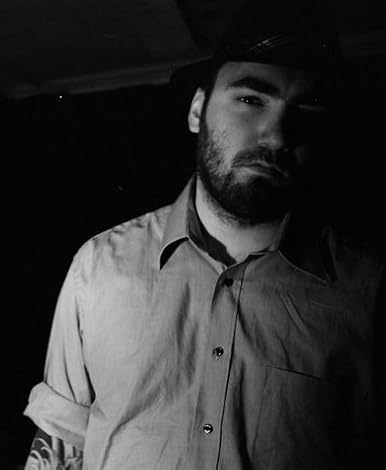
Image of Ian Truman

What are you most proud of accomplishing so far in your life?

Getting out of bad neighbourhoods through hard work. Finishing college. Setting up a college fund for my daughter. It might sound stupid, but most people my age or from my background don’t set up college fund. I carry my student debt on my back now. My daughter won’t if I (and my spouse) have anything to say about it.

What is your favourite color?

I don’t really have one. My visual art’s strictly black and white these days but I could say that I love the color of the sun about an hour before it sets. If you’re a photographer, you know that’s happy hour.

What is your favourite food?

All things vegetarian. I eat a lot of good veggie food from all over the world. I found a way to make real deli subs without the meat. You add the same spices as you would on steak or you use smoked paprika/rosemary on thinly sliced tofu and you throw in your vegetables, dried tomatoes and salad, some oil and plenty of cheese (you could make it vegan, but I’m not quite there yet) and a toothpick on top of the bread and that’s it.

What’s your favourite place in the entire world?

My home. Right now it’s a bit small and it’s a bit of a mess (try to fit a kid and two artists, two cats and two lizards in a two bedroom apartment!) I’d like to have a workshop at home and it would be perfect. I don’t like being out of the house unless I have something to do. Some people are travelers and explorers, I feel I’m more of a builder. I stick to one place and try to build on that.

How has your upbringing influenced your writing?

I can’t say that it has. My parents made sure I was a decent human being so there’s that. I did a few mistakes on the way there but hey, I’m 31, I’m engaged, I’m a dad, managed to finish college. I guess my parents did something right. They taught me to always be honest because living with remorse or regret is to live a shitty life. I try to have the same honesty about my work so there’s that. I have them to thank for my work ethics, but my parents never sat down and went “so, here’s how you do a proper outline,” you know? They always supported my writing but there’s no way they could have known how to help me write better stories.

Do you recall how your interest in writing originated?

I was still in grade school and we used to play role-playing games. Then we decided for one reason or another, to write our own quests and games. I don’t think I’ve stopped writing since.

When and why did you begin writing?

I remember it was a game called Hero Quest and we had pretty much played all the quests in the game so we tried writing new ones. That was in grade four I think. Then I tried writing my own role-playing game and I have vague memories of what it looked like but I remember writing background stories for a bunch of monsters and all. That didn’t go anywhere and it didn’t make me a popular kid, that’s for sure (and then high school came!!!) but the very first think I ever wrote was a quest for some board game, I guess. (Not as glorious as you’d think, right?)

How long have you been writing?

Creatively, I’d say grade three, maybe four (it was a while ago). I don’t remember anything before that but the first few lines of original concepts, that was maybe age 9 or 10.

A Teenage Suicide

“All they really wanted to do was fuck around, be creative, listen to music, skateboard or go to shows. People kept telling them growing up was supposed to be tough but it’s not like they didn’t know that already. Timmy had listened. Timmy had finished school and got himself a job. That didn’t stop him from running his van into a pillar one night so what was the fucking use? Nobody seemed to have an answer.“

Conor and his friends are growing up in a one factory town where the most likely employment prospect is the assembly line or the farmer’s coop. Aiming higher than the local college, Conor finds himself spending more and more time in downtown Montreal, discovering himself through punk and hardcore music. But as his girlfriend wants nothing to do with the city and his friend Jake loses his brother when the factory closes, Conor’s ambitions could require him to burn bridges he might not be ready to burn.

With A Teenage Suicide, Ian wanted to write a story about kids making decisions and kids making mistakes. Stylistically, it is fair to mention influences of Truman Capote and Mordecai Richler. Imagine of the “cold-hard-fact” descriptions of In Cold Blood mixed with the realistic and witty dialogue of The Apprenticeship of Duddy Kravitz.

Ian Truman is a hardcore kid turned writer. He proudly claims to be from a working class family and has been straight edge and vegetarian for at least a decade now. He hopes to bring the passion, verve and dedication of hardcore into the art form of the novel. Born and raised in Montreal, he is a graduate of Concordia University’s creative writing program. A Teenage Suicide is his third novel.

Buy Now @ Amazon & Smashwords

Genre - Literary, Coming of Age

Rating – PG13

More details about the author and the book

Connect with Ian Truman on Facebook

Website http://www.iantruman.com

The Christmas Cowboy by Shanna Hatfield @ShannaHatfield #thechristmascowboy

Tate surprises Kenzie by showing up on her doorstep late one afternoon… Standing on her front step, he rang the bell and listened to her footsteps hurrying toward the door. The smile on her face forced him to catch his breath.

“Hey! What are you doing here?” Kenzie asked, kissing his cheek then stepping aside so he could come in out of the cold.

Curiosity got the best of her when he stood staring at her, his good hand still behind his back. Trying to look around him, he turned so she couldn’t.

“What are you hiding?” she asked, her eyes warm and inviting when he stepped inside and nudged the door shut behind him with his boot.

“I couldn’t help but notice you’re missing a very important component of proper Christmas décor,” Tate said, sounding all knowing and official.

“What could I possibly be missing?” Kenzie asked, looking behind her and sweeping her arm toward the living room that did look particularly festive, thanks in part to Tate. “I’ve got a poinsettia, a beautiful Christmas tree, garlands, pine boughs, sugary treats, and a blazing fire. Did you bring me some chestnuts to roast? If you did, I’ve got no clue what to do with them, so you’re out of luck.”

Laughing, Tate raised his arm and held a bunch of mistletoe over their heads. “It seems to me this is the most important decoration of all.”

“Possibly,” Kenzie said, reaching out and looping her arms around Tate’s neck, pulling his head down to hers. Teasing and gentle at first, their kiss soon gained momentum until he dropped the mistletoe on the table near the door and she pressed as close against him as his thick coat would allow.

Taking a breath, she quickly unfastened the snaps on his coat and slid it off his shoulders, carefully over his injured arm, until it dropped to the floor. He tossed his hat on the little chair Kenzie kept by the door while a groan escaped his throat. He took in every feature of her face, the mouth-watering summery fragrance surrounding her, and the softness of the hot pink sweater she wore. Her favorite color currently matched the shade of her flushed cheeks.

Lowering his head to hers again, Tate wrapped his good arm around her waist and slowly backed her toward the living room without breaking the connection of their lips.

“I missed you,” he whispered against her mouth as he carefully guided her to the couch. When her knees connected with the edge, she sank down on the soft cushions, still holding onto Tate. He went down with her, ravishing her neck with sizzling kisses that made her whisper his name in a throaty tone, sending blood surging through his veins.

The Christmas Cowboy

"10% of the net proceeds from all my book sales December 1-24 will be donated to the Justin Cowboy Crisis Fund®"

Buy Now @ Amazon

Genre – Romance (contemporary western)

Rating – PG

More details about the author

Connect with Shanna Hatfield on Facebook and Twitter

Website http://shannahatfield.com